

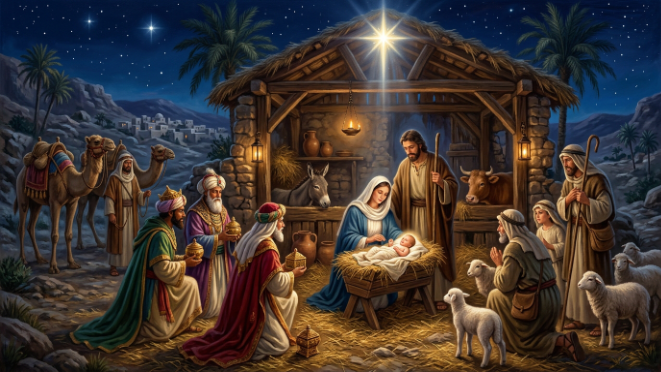
The term Nativität, known in English as the Nativity, refers to the birth of Jesus Christ. It is one of the most important events in Christian theology and is celebrated globally as the foundation of Christmas. The word comes from the Latin nativitas, meaning “birth,” and over time it has become a powerful symbol of hope, faith, humility, and divine love.
The Nativity is not only a religious story but also a cultural and historical phenomenon that has shaped art, traditions, music, and celebrations across the world. Its influence extends far beyond Christianity, making it a story recognized in many societies.
Biblical Background of Nativität
The Nativity story is mainly found in two books of the New Testament: the Gospel of Matthew and the Gospel of Luke. Each Gospel presents a slightly different but complementary version of the birth of Jesus Christ.
In Matthew’s account, the focus is on Joseph and the divine revelation he receives through dreams. It explains how Joseph is told that Mary’s pregnancy is from the Holy Spirit and that the child is the promised Messiah. Matthew also highlights the visit of the Magi, or Wise Men, who follow a star to Bethlehem. They bring gifts of gold, frankincense, and myrrh, symbolizing kingship, divinity, and sacrifice.
Luke’s Gospel provides a more detailed narrative of the journey to Bethlehem. It describes Mary and Joseph traveling from Nazareth to Bethlehem for a census ordered by Roman authorities. Because there was no room in the inn, Jesus is born in a humble stable and placed in a manger. Angels appear to shepherds in the fields, announcing the birth of the Savior and spreading the message of peace and joy.
Together, these two accounts form the foundation of the Nativity story that is celebrated during Christmas.
Theological Importance of the Nativity
In Christian belief, the Nativity represents the Incarnation, which means God becoming human in the form of Jesus Christ. This is a central doctrine in Christianity, emphasizing that Jesus is both fully divine and fully human.
The birth of Jesus is seen as the fulfillment of Old Testament prophecies that predicted the arrival of a Messiah who would bring salvation to humanity. Through the Nativity, Christians believe that God entered the world to guide people toward forgiveness, peace, and spiritual renewal.
The humble setting of Jesus’ birth also carries deep symbolic meaning. Instead of being born in a palace or place of power, Jesus was born in a stable, showing that divine love is accessible to everyone regardless of social or economic status. This humility is a key message of the Nativity.
Historical Development of Nativity Traditions
Over time, the Nativity story became more than a biblical narrative; it developed into a rich cultural tradition. By the Middle Ages, Christians began creating visual representations of the birth of Jesus to help people understand the story more deeply.
One of the most important developments came from Saint Francis of Assisi, who is credited with creating the first live Nativity scene in 1223 in Italy. He used real people and animals to recreate the event, making the story more relatable for ordinary people who could not read the Bible.
This practice quickly spread across Europe and eventually evolved into artistic displays known as nativity scenes. These scenes became a central part of Christmas celebrations, especially in countries with strong Christian traditions.
Nativity Scenes (Krippe) and Their Symbolism
A nativity scene, known in German as a Krippe, is a visual representation of the birth of Jesus Christ. It typically includes figures such as Mary, Joseph, baby Jesus, shepherds, angels, the Magi, and animals like sheep and donkeys.
These scenes are not just decorative; they carry deep symbolic meaning. Each figure represents an important part of the Nativity story and its spiritual message. The stable represents humility, the star represents divine guidance, and the gifts of the Magi represent recognition of Jesus’ divine role.
In countries like Germany, Italy, and Spain, nativity scenes are highly detailed and often include entire village settings. In Germany, they are commonly displayed in homes, churches, and Christmas markets, known as Weihnachtsmärkte, becoming an essential part of the festive atmosphere.
Cultural Traditions Around the World
The celebration of Nativität has taken different forms across cultures, while still preserving its central message.
In Spain and Italy, nativity scenes are often large and artistic, sometimes including hundreds of figures that represent both biblical and local life. These elaborate displays are a major part of Christmas celebrations.
In Mexico, the tradition of Las Posadas reenacts Mary and Joseph’s search for shelter in Bethlehem. This involves community gatherings, processions, and prayers, ending in celebration. It emphasizes hospitality, unity, and faith.
In Germany, nativity scenes remain deeply rooted in Christmas traditions. Alongside Christmas markets, they help preserve the religious meaning of the holiday while blending with cultural festivities.
These global variations show how the Nativity story has been embraced and adapted by different cultures while maintaining its spiritual core.
Nativity in Modern Christmas Celebrations
In the modern world, Christmas has become both a religious and cultural holiday. Even in societies where religious practice is less central, the themes of the Nativity—peace, love, and kindness—continue to play an important role.
Nativity scenes are still displayed in churches, public squares, and homes. Christmas carols such as “Silent Night” and “O Holy Night” are inspired by the Nativity story and continue to be sung worldwide.
At the same time, modern celebrations combine tradition with contemporary culture. While gift-giving and festive gatherings are now common, the Nativity remains a reminder of the original meaning of Christmas.
Conclusion
Nativität, or the Nativity, is a powerful and timeless story that goes beyond religion and history. It represents the birth of Jesus Christ and carries messages of hope, humility, peace, and divine love.
From its biblical origins in the Gospels to its expression in nativity scenes, cultural traditions, and global celebrations, the Nativity has shaped how Christmas is understood and celebrated across the world.
Even today, it continues to inspire people by reminding them of the importance of compassion, unity, and faith in everyday life.
FAQs
What does Nativität mean?
Nativität is the German word for Nativity, which refers to the birth of Jesus Christ. It is a central event in Christian belief and the foundation of Christmas celebrations.
Why is the Nativity important in Christianity?
The Nativity represents the Incarnation, the belief that God became human through Jesus Christ. It is seen as the beginning of salvation and a key moment in Christian theology.
Where is the Nativity story found in the Bible?
The Nativity story is mainly described in the Gospels of Matthew and Luke in the New Testament, each giving different details about the birth of Jesus.
What is a nativity scene (Krippe)?
A nativity scene, or Krippe in German, is a visual display of Jesus’ birth. It includes figures like Mary, Joseph, baby Jesus, shepherds, angels, and the Magi.
What gifts did the Three Wise Men bring?
The Magi brought gold, frankincense, and myrrh, each symbolizing kingship, divinity, and sacrifice.
