

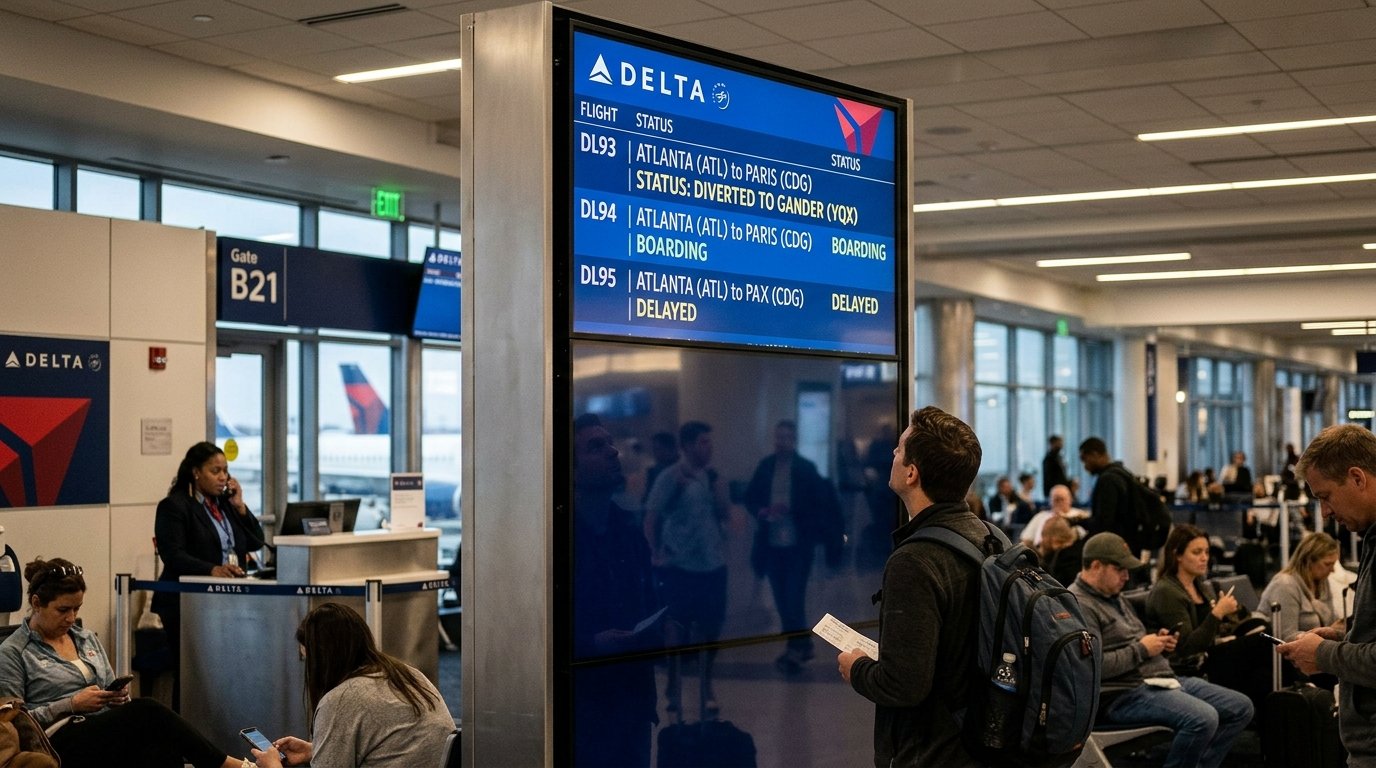
Air travel disruptions always attract attention, especially when a long-haul international flight suddenly changes course midair. That is exactly what happened with Delta Flight DL93 diversion incidents, which became major discussion points among travelers, aviation analysts, and flight-tracking communities. The route between Berlin Brandenburg Airport and John F. Kennedy International Airport experienced unexpected operational interruptions that raised questions about aircraft safety, emergency aviation procedures, and passenger rights.
The situation became even more noticeable because the diversions happened on separate occasions involving aging widebody aircraft operated by Delta Air Lines. Aviation enthusiasts closely followed the events through live tracking platforms, while passengers searched for answers regarding delays, compensation, and rebooking options.
Understanding the Delta Flight DL93 Route
Delta Flight DL93 operates as an international transatlantic service connecting Germany and the United States. The route links Berlin directly with New York, giving travelers another nonstop option between Europe and America. Since its relaunch, the route has played an important role for business travelers, tourists, and international passengers flying across the Atlantic.
The flight normally uses aircraft from the Boeing 767 family, including the Boeing 767-300ER and Boeing 767-400ER. These aircraft are designed for long-distance international operations and remain part of Delta’s widebody fleet despite increasing industry conversations about fleet modernization.
Although the route usually operates smoothly, the Delta Flight DL93 diversion incidents showed how quickly international operations can change when technical concerns appear during flight.
The 2023 Delta Flight DL93 Diversion
One of the most talked-about incidents occurred in August 2023. Shortly after departure from Berlin Brandenburg Airport, the aircraft unexpectedly turned around while flying above the North Sea. Live tracking data from FlightRadar24 showed the aircraft making a sharp course change before heading toward Amsterdam Schiphol Airport.
Passengers onboard later reported that the crew informed them about a warning-system issue. While the situation was not described as immediately dangerous, the crew followed aviation safety protocols and decided not to continue the ocean crossing.
The aircraft involved was a Boeing 767-300ER registered as N182DN. Aviation observers noted that the plane had already been in service for decades, which fueled discussions about aging aircraft operating on demanding international routes.
After landing safely in Amsterdam, maintenance teams from Delta Air Lines evaluated the aircraft. The flight was eventually canceled, and passengers were rebooked onto alternative services.
The 2025 Diversion to London Heathrow
Another Delta Flight DL93 diversion drew attention in August 2025. During this incident, the aircraft reversed course over Ireland before diverting to London Heathrow Airport.
Unlike the earlier event, no emergency squawk was publicly reported, but aviation tracking platforms including AIRLIVE closely monitored the flight in real time. The aircraft involved was a Boeing 767-400ER registered as N832MH.
Although Delta did not publicly confirm the exact technical issue, aviation analysts widely believed the diversion resulted from a precautionary operational concern. Modern aviation procedures prioritize safety over schedule reliability, especially during transatlantic flights where emergency alternatives become limited once aircraft move farther over the ocean.
The crew successfully landed the aircraft at Heathrow, where ground teams inspected the plane before arranging onward travel operations.
Why Flight Diversions Happen
Aviation diversions happen for many reasons, but safety always remains the highest priority. Pilots and airline operation centers constantly monitor aircraft systems throughout the journey. If any warning appears that could affect long-haul safety, the crew may decide to land at the nearest suitable airport.
Common reasons include:
- Mechanical system warnings
- Cabin pressure irregularities
- Medical emergencies
- Weather concerns
- Fuel-management issues
- Security alerts
In the case of Delta Flight DL93 diversion events, technical concerns appeared to be the primary factor. Even smaller warning-system problems can trigger precautionary landings because international safety regulations leave little room for risk during ocean crossings.
What Squawk 7700 Means
One important aviation term connected to the 2023 incident was “Squawk 7700.” This emergency transponder code immediately alerts air traffic control that an aircraft is experiencing a general emergency situation.
When pilots activate this code, air traffic controllers prioritize the aircraft for landing and coordinate emergency response teams at the destination airport. Although hearing about Squawk 7700 can sound alarming to passengers, it does not always indicate catastrophic danger. Often, it simply allows the crew to receive faster assistance and safer routing.
The use of this emergency protocol during the Delta Flight DL93 diversion demonstrated how aviation systems are designed to respond quickly and efficiently whenever operational concerns arise.
Passenger Experience During the Diversion
For travelers, diversions can become stressful and confusing experiences. Many DL93 passengers reported uncertainty during the delays and rebooking process, especially after arriving at alternate airports.
Some travelers struggled to receive immediate updates regarding accommodations, connecting flights, and compensation eligibility. Others relied heavily on flight-tracking services such as FlightAware and FlightStats for real-time information.
Despite the inconvenience, many passengers also praised the professionalism of the flight crews, who prioritized calm communication and safety throughout the incidents.
International diversions often create logistical challenges because airlines must quickly arrange:
- Hotel accommodations
- Meal vouchers
- Rebooking services
- Replacement aircraft
- Customs coordination
- Ground transportation
Large international hubs like Amsterdam Schiphol Airport and London Heathrow Airport are generally better equipped to handle these unexpected situations.
Aging Boeing 767 Aircraft and Industry Debate
The Delta Flight DL93 diversion incidents also renewed debate about aging long-haul aircraft. Both diversions involved Boeing 767 variants that had been operating for decades.
While aircraft age alone does not automatically make planes unsafe, older fleets often require more maintenance and monitoring. Airlines worldwide continue balancing fleet modernization with operational costs, especially as new-generation aircraft offer improved fuel efficiency and updated technology.
Both Delta Air Lines and United Airlines still operate large Boeing 767 fleets on international routes. Aviation experts regularly debate how long these aircraft should remain active in commercial service.
At the same time, many aviation professionals point out that maintenance quality matters more than aircraft age itself. Properly maintained aircraft can continue operating safely for many years under strict international aviation regulations.
Passenger Rights After an International Diversion
Travelers affected by international diversions often qualify for assistance and compensation depending on local regulations. Since DL93 departed from Germany, passengers may fall under European passenger-rights protections.
Under EU regulations, compensation eligibility can depend on several factors, including:
- Cause of the disruption
- Delay duration
- Final arrival time
- Availability of replacement flights
Technical issues sometimes qualify passengers for compensation, especially if the airline could reasonably have prevented the disruption. Travelers are usually encouraged to keep:
- Boarding passes
- Receipts
- Hotel invoices
- Email communications
- Delay notifications
These documents help support compensation claims if required later.
How Aviation Tracking Platforms Covered the Story
Modern aviation tracking technology played a major role in spreading information about the Delta Flight DL93 diversion incidents. Platforms such as FlightRadar24 and FlightAware allowed people worldwide to follow the flights in real time.
Users observed route deviations, altitude changes, holding patterns, and emergency diversions almost instantly. Social media discussions quickly expanded as aviation enthusiasts analyzed aircraft movements and possible operational causes.
This growing access to live aviation data has changed how passengers experience flight disruptions. Travelers now often learn about route changes before official airline statements appear.
The Bigger Picture for Delta’s Berlin Route
The Berlin-to-New York market remains highly competitive. Airlines must balance operational reliability, passenger demand, and aircraft availability while maintaining profitable schedules.
Delta Air Lines continues competing with major international carriers for transatlantic travelers departing Germany. The route itself represents an important connection between two major global cities.
Although diversions create temporary disruption, they also demonstrate how modern aviation safety systems work exactly as intended. Pilots, maintenance teams, air traffic controllers, and airport staff coordinate rapidly to protect passengers whenever unexpected issues arise.
Final Thoughts
The Delta Flight DL93 diversion incidents became widely discussed because they combined emergency aviation procedures, international travel disruption, and live public flight tracking into one unfolding story. From the diversion to Amsterdam Schiphol Airport in 2023 to the reroute toward London Heathrow Airport in 2025, both situations highlighted the importance of caution in modern aviation.
While delays and diversions can frustrate travelers, they ultimately reflect the industry’s strong focus on safety-first decision-making. As airlines continue modernizing fleets and expanding international operations, incidents like these remind passengers how complex and carefully managed global aviation truly is.
